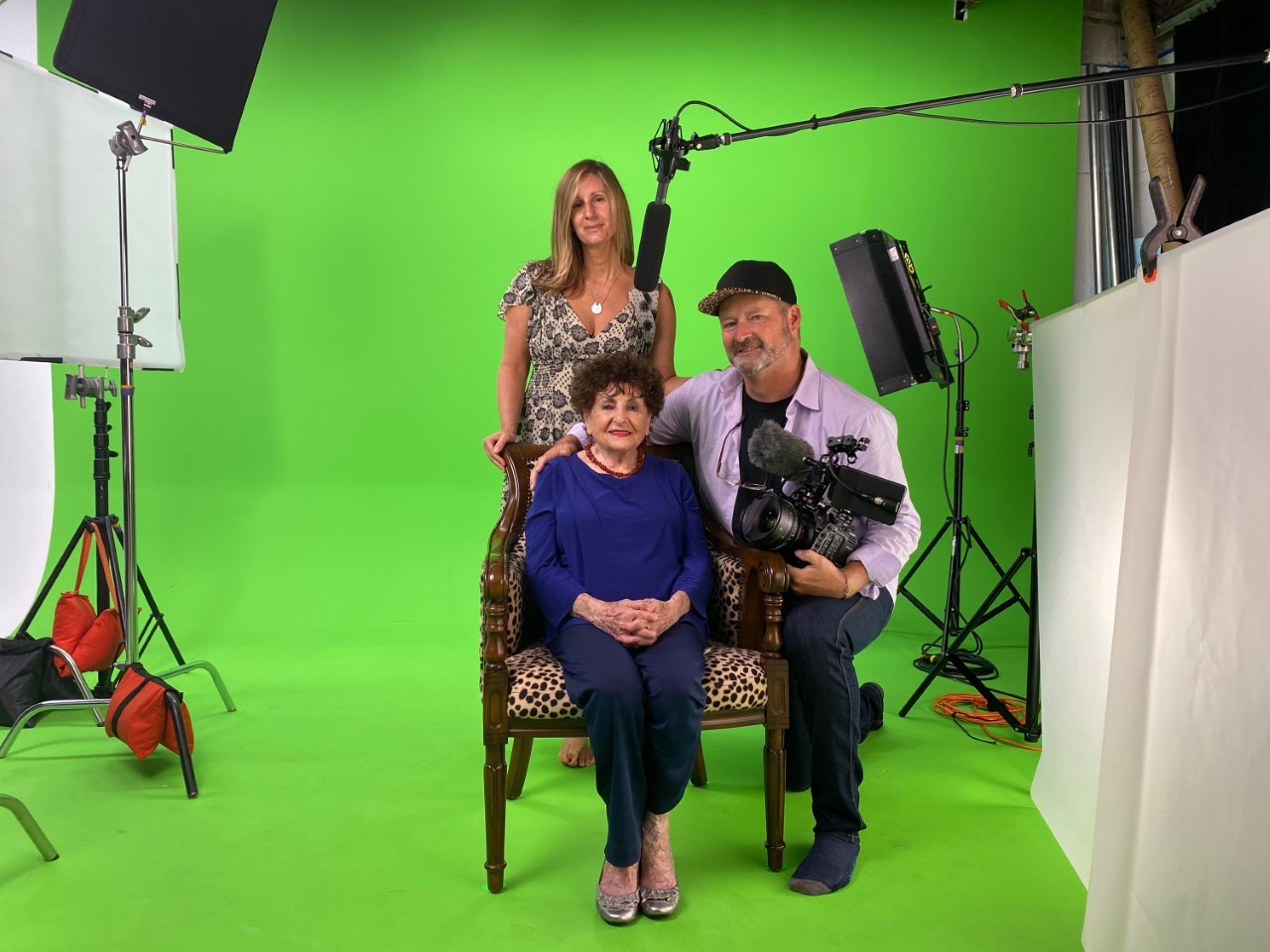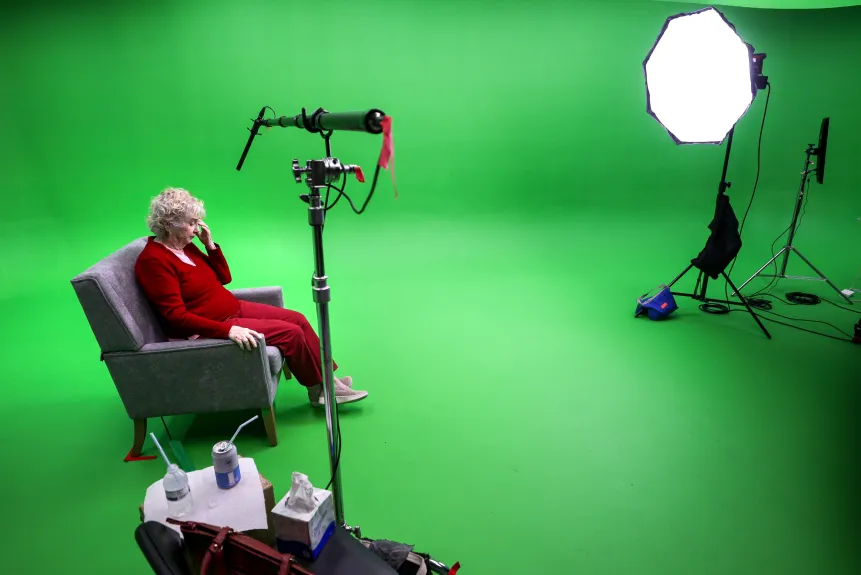
On International Holocaust Remembrance Day, January 27, Suzanne Schneider sat beneath studio lights in Orlando and answered questions she has carried with her for decades: Were you afraid? Were you in a concentration camp?
“It’s a responsibility,” she said quietly. “I just have to do it.”
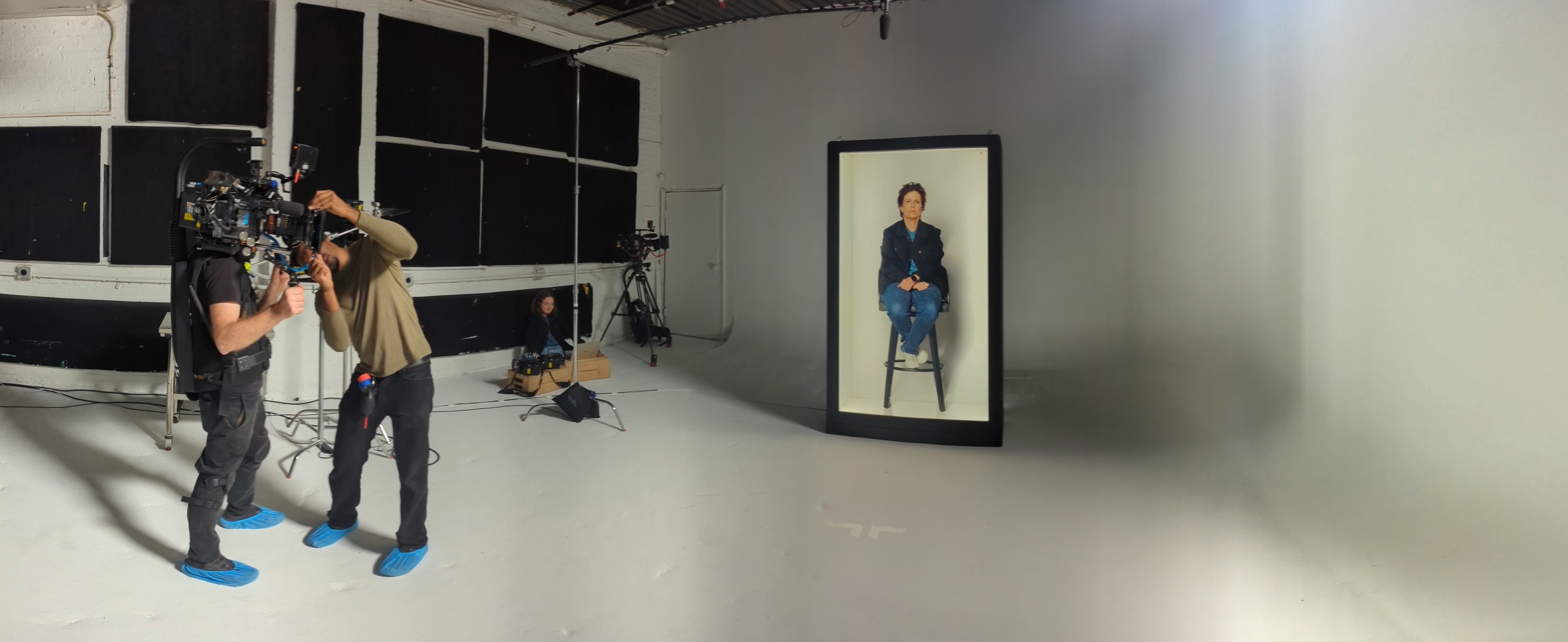
Schneider, 88, a Winter Park resident, survived Nazi-occupied Poland as a Jewish child. Her memories are vivid: hiding silently in a hayloft where she was forbidden to speak for fear of discovery, pretending to be a distant relative of a Catholic couple who took her in when she fell ill, navigating a world where survival required constant vigilance. Now, through a series of structured StoryFile interviews recorded at Green Slate Studios in Orlando, those memories are being preserved in a way that will allow future generations to ask her those same questions—and hear her answers in her own voice.
“I think it’s funny, really,” Schneider reflected. “I’ll be dead, and then I’ll still be talking, in my red pants.”
Her testimony will become a cornerstone of the forthcoming Holocaust Museum for Hope & Humanity, slated to open in downtown Orlando in 2027. The museum’s leadership has made a deliberate decision: local survivor stories will anchor the visitor experience.
“We have made efforts to really root the core experience of the new museum in Florida stories,” said Suzanne Grimmer, senior director of museum experiences. “That’s really important to us.”
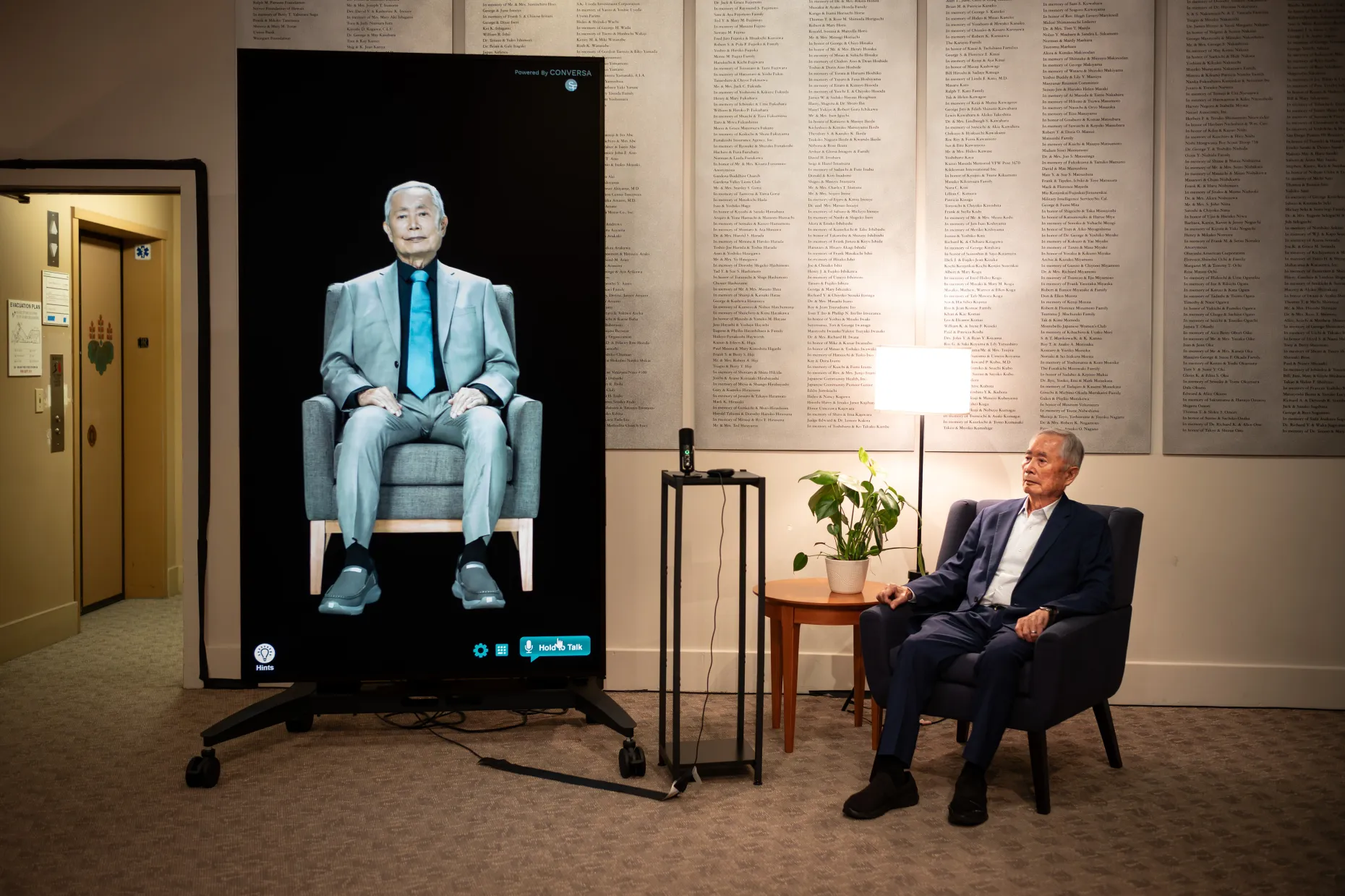
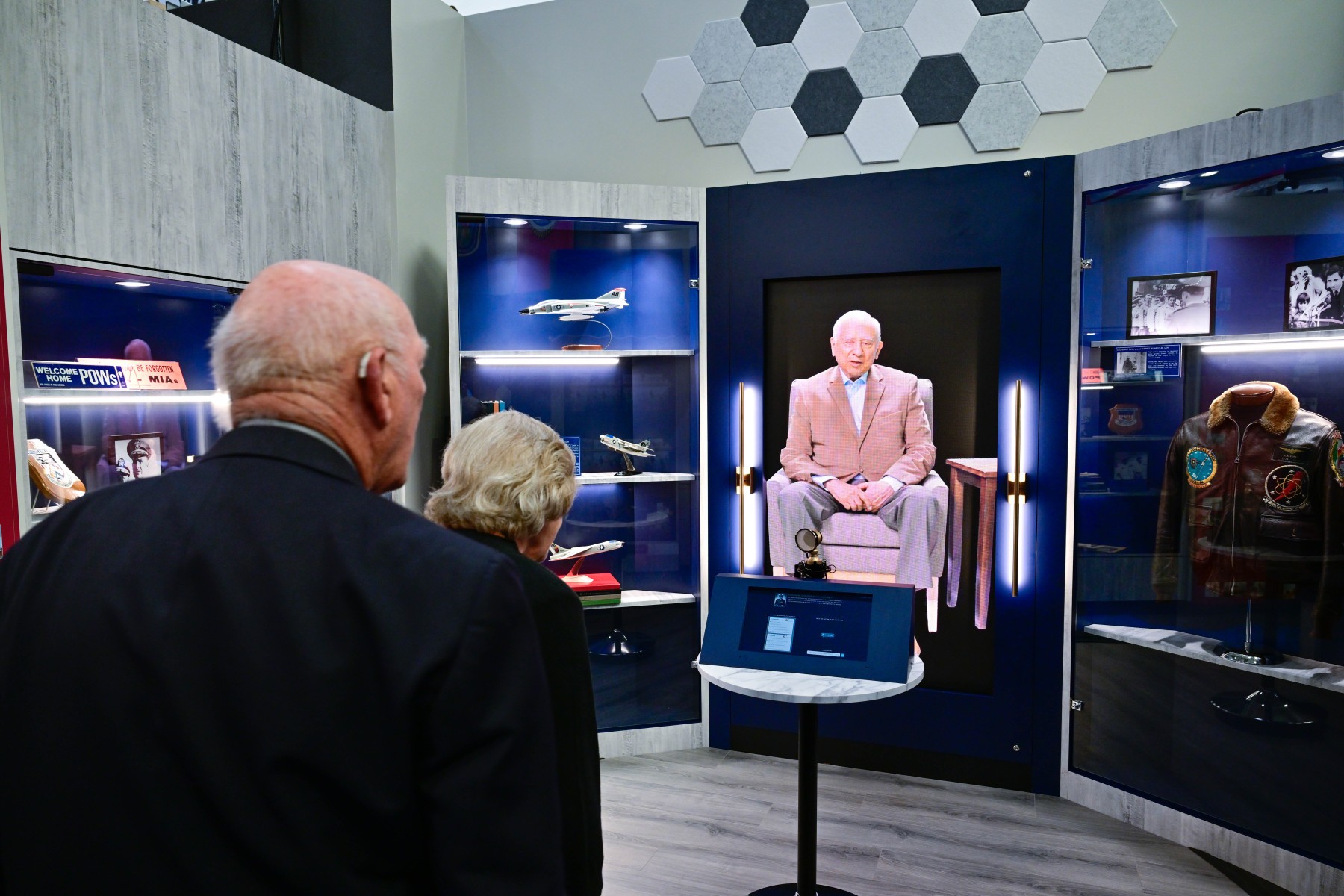
Using StoryFile’s conversational video platform, Schneider answered roughly 450 questions during her recording sessions—ranging from the historical to the deeply personal. Visitors to the museum will encounter her on a life-size screen, seated across from an empty chair. When they ask a question, the system will draw exclusively from her recorded responses, creating a natural, face-to-face dialogue grounded entirely in her lived experience.
“When you walk by her, it will start a conversation,” Grimmer explained. “We will put a chair across from her and you can talk.”
The goal is not simply to present history, but to create a moment of connection—one that reaches both heart and mind. By enabling visitors to engage directly with survivors’ own words and expressions, the museum is transforming testimony from a static archive into an active exchange.
Schneider is not alone in this effort. The museum has also recorded 94-year-old survivor Harry Lowenstein, who was separated from his parents as a teenager and imprisoned in multiple concentration camps. “It was incredible he was able to survive,” Grimmer said. “He remembers Kristallnacht.” His story, she noted, resonates particularly with young visitors: “Middle schoolers and high schoolers can relate to his story. I think they see themselves in it.”
In addition, the museum plans to record two Central Florida “liberators”—Allied troops who witnessed the camps firsthand at the war’s end—broadening the exhibit’s perspective while maintaining its focus on firsthand experience.
The investment is substantial, but museum leaders view it as essential. As the survivor generation ages, preserving authentic testimony becomes both urgent and foundational. While the Holocaust Center continues its partnership with national archives for educational programming, capturing local voices ensures that Florida’s own survivors remain central to the museum’s identity.
For Schneider, the reason is clear.
“It’s an obligation I have,” she said. “As long as I can do it, I’m going to do it. It’s history, and it has to be told.”
With interactive, first-person testimony at its core, the Holocaust Museum for Hope & Humanity is building more than an exhibition—it is creating an enduring conversation between past and future, ensuring that the voices of those who lived through history will continue to be heard.
Want to Learn More?